Acupuncture for Bloating: 7 Root Causes and How We Treat Each One
If bloating has become a regular part of your life, you probably feel like you’ve tried everything. Maybe you’ve cut out dairy, taken probiotics, tried elimination diets, or been told to “just eat more fiber.” And yet the bloating keeps coming back.
As a licensed acupuncturist in Richmond, Virginia, I work with patients dealing with chronic bloating who are frustrated because nothing has given them lasting relief. That doesn’t mean those approaches were wrong. It means the root cause hasn’t been identified yet. And that’s exactly what Chinese medicine is designed to do.
Where conventional medicine often treats bloating as a single problem, Chinese medicine recognizes that bloating can arise from at least seven different root causes. Each one requires a different treatment approach. A person whose bloating comes from stress and emotional tension needs something entirely different than a person whose bloating comes from weak digestion and feeling cold all the time.
That’s why a one-size-fits-all approach often fails, and it’s why so many people feel like they’ve “tried everything” without lasting relief. The issue isn’t that your body can’t be helped. It’s that the root cause hasn’t been properly identified.
In this article, I’ll walk you through the seven patterns of bloating I see most often in my practice, what causes each one, what you can do right now, and what the research says about acupuncture for digestive issues.
Why Bloating Is More Than Just a Stomach Problem
Bloating affects an estimated 16-31% of the general population, making it one of the most common digestive complaints. Most people experience it as a feeling of fullness, tightness, or visible distension in the abdomen, often after eating.
What many people don’t realize is that bloating is rarely just about your stomach. Research increasingly points to bloating as a whole-body issue involving gut microbiome imbalances, nervous system dysregulation, inflammation, and hormonal fluctuations. Your stress levels, your emotional state, your dietary habits, and even the climate you live in can all be driving the bloating you experience.
This is where Chinese medicine has a real advantage. Rather than treating every case of bloating the same way, I look at the underlying pattern driving your specific symptoms. Two patients can walk into my clinic both saying “I’m always bloated,” and I might treat them in completely different ways, because the root cause is different.
Seven Patterns of Bloating I See Most Often
In Chinese medicine, bloating isn’t one condition. It’s a symptom of an underlying imbalance, and the imbalance varies from person to person. Here are the seven patterns I encounter most frequently at my practice in Richmond.
Food Stagnation: The Overeating Pattern
This is the most straightforward pattern. Common symptoms include bloating that is relieved by passing gas, belching, flatulence, bad breath, reflux, and irregular stools. It can be acute or chronic.
What causes it: overeating, eating at irregular times, late-night eating, too much cold or raw foods, or generally weak digestion. Over the long term, this pattern is a precursor to many other health problems because of the strain it places on the digestion and detox pathways.
One thing you can try now: Avoid overeating, and try pu-erh or green tea after meals to stimulate digestion. In Chinese medicine theory, the bitter flavor has a descending action that helps move things along. If you’ve had these symptoms for a long time, it’s worth getting a proper assessment.
Spleen and Stomach Qi Deficiency: The Weak Digestion Pattern
This pattern shows up as bloating that can be intermittent or constant, often involving fluid retention (sometimes in other parts of the body too). The bloating feels better with warmth and gets worse with raw foods or overeating. Other symptoms include poor appetite, pale complexion, fatigue, and loose stools.
Yang Deficiency is an extreme version of this, where the patient feels cold easily on top of the other symptoms.
What causes it: too much cold or raw foods, a sedentary lifestyle, antibiotics, prolonged illness, chronic digestive inflammation, or a history of anorexia or malnutrition.
One thing you can try now: Eat only cooked foods and chew thoroughly. Focus on complex carbs and vegetables, go lighter on meat. Avoid excessive fluids with meals. Sit down and relax while eating. Cut dairy, soy, nuts and seeds, and excess sweets. Chinese herbs over a few months can be wonderful for this type of bloating.
Phlegm-Damp: The Heavy, Sluggish Pattern
Common symptoms include pronounced abdominal distension (sometimes worse after waking), general fatigue and lethargy, poor appetite, nausea, belching, reflux, loose stools, and possibly chronic sinus or lung mucus, especially waking with phlegm in your throat. Symptoms are often worse in the morning or after inactivity.
What causes it: overeating dairy, sweets, fatty foods, and alcohol. These are what we call “phlegm and damp-forming foods.” Living in damp, humid climates like Richmond, Virginia, especially during the summer, can also make this pattern worse.
One thing you can try now: Shift your diet toward about 50% vegetables, 30-40% carbs, and 10% protein. Include bitter and pungent foods like mustard greens, horseradish, turnips, and radishes. Make good use of onions and garlic. Cut late-night eating, sugar, dairy, soy, and beer. A couple of months of Chinese herbs can make a dramatic difference with this pattern.
Liver Qi Stagnation: The Stress Bloating Pattern
This is the stress-driven pattern. Common symptoms include stomachaches or holding stress in the gut, appetite that drops when you’re stressed, discomfort under the ribs (especially the right side) after eating, frequent belching, a gurgling belly, acid reflux, and irregular bowel movements. The key tell is that symptoms come and go in tandem with your emotional state.
What causes it: overeating or eating too frequently, and especially repressed emotions like anger or resentment. These types of emotions create tension in the gut, which can significantly affect digestive motility and bowel regularity.
One thing you can try now: Regular exercise is extremely important for this type of bloating. Movement breaks the stagnation cycle. Eat slowly, and try to reduce meal frequency or portion size. Focus on vegetables, go lighter on carbs and meat, and especially avoid fried foods and alcohol. Acupuncture can be hugely transformative for stress-related digestive issues, and there are herbal regimens that support the Liver and digestion together.
If stress is a significant part of your picture, you may also find my article on acupuncture for stress helpful.
Lung and Spleen Deficiency: The Grief Pattern
This is a pattern many practitioners overlook. Common symptoms include acute or chronic bloating that is mildly painful and worsens with food, nausea or belching, shortness of breath (possibly asthma), hunched posture, a melancholic tendency, pale complexion, and possible constipation.
What causes it: grief, social isolation, major changes in routine, or following a cold or flu. In Chinese medicine, the Lung and Spleen systems are closely connected, and emotional stress (especially grief) can weaken both.
One thing you can try now: Addressing unresolved emotional issues is key with this pattern. Breathing exercises and aerobic exercise can be quite helpful. Chew food thoroughly, eat smaller meals, stick to well-cooked foods, and avoid drinking lots of fluid with meals. Acupuncture and Chinese herbs can be very restorative over a few months when this pattern is stubborn or longstanding.
Damp-Heat: The Inflammatory Pattern
Common symptoms include bloating that worsens in the afternoon or after eating with loss of appetite, dry mouth or thirst with no desire to actually drink, irritability, greasy or reddish skin, lethargy, and dark yellow or orange urine.
What causes it: overeating rich, fatty foods, alcohol (especially beer), or living in hot, humid climates. Richmond summers, with their heat and humidity, are a classic trigger for this pattern.
One thing you can try now: Eat light foods (some raw foods are fine with this pattern, unlike many of the others). Avoid alcohol, dairy, greasy foods, sugar, highly processed foods, nuts and seeds, and coffee.
Stomach Yin Deficiency: The Chronic Depletion Pattern
This is the pattern that develops after a long period of poor health habits or sometimes following a prolonged illness. Common symptoms include chronic bloating that worsens with eating or at the end of the day, a general feeling of dryness, constipation or dry stool, low appetite (or hunger with no desire to eat), mild nausea, and facial flushing or night sweats.
One thing you can try now: Consume plenty of non-caffeinated liquids, especially soups and stews. Focus on nourishing foods: healthy fats, fish, fruits, and vegetables. Avoid too many spicy or pungent foods (peppers, garlic, onions), as well as NSAIDs, coffee, and alcohol. Chinese herbs are excellent for this pattern, though healing Stomach Yin Deficiency takes time and patience.
What the Research Says About Acupuncture for Digestive Issues
The evidence for acupuncture for digestive conditions, including bloating, functional dyspepsia, and IBS, has grown substantially in recent years.
A 2025 meta-analysis evaluating acupuncture for functional dyspepsia across 23 randomized controlled trials with 2,454 participants found that acupuncture improved symptoms and quality of life compared to sham acupuncture, with high to moderate certainty evidence and without increasing adverse events.
A 2024 Bayesian meta-analysis found that combining acupuncture with conventional treatment was more effective than conventional treatment alone for functional dyspepsia, with particular benefits for early satiation and postprandial fullness, two symptoms closely tied to bloating.
Research on acupuncture and IBS has also been promising. A 2025 systematic review analyzing 14 randomized controlled trials with 2,038 participants found that acupuncture significantly improved quality of life and symptom severity in IBS patients compared to conventional treatment, with fewer adverse events in the acupuncture group.
On the mechanism side, a 2024 review examining how acupuncture interacts with the gut microbiome found that acupuncture can influence gut microbiota composition, which plays a role in metabolic diseases, gastrointestinal conditions, and even mental health disorders. This supports what Chinese medicine has recognized for centuries: that digestive health is connected to the health of the entire body.
A 2024 study on anxiety and depression in functional dyspepsia patients confirmed that acupuncture can improve the emotional symptoms that often accompany chronic digestive issues, addressing the frustration and anxiety that many bloating patients experience.
The bottom line: acupuncture for bloating and digestive issues is supported by substantial clinical evidence. It works on the underlying patterns driving your symptoms, not just masking the discomfort.
A Patient’s Story: How Acupuncture Changed Lisa’s Bloating
At 44, Lisa had been bloated almost every day for three years. She’d tried eliminating gluten, dairy, and FODMAPs. She’d taken probiotics, digestive enzymes, and antacids. Her gastroenterologist had run labs and a scope and told her everything looked “normal.” But Lisa didn’t feel normal. The bloating would start within an hour of eating lunch and by evening she looked six months pregnant.
When Lisa came to Centered: Richmond Acupuncture, her intake revealed a clear picture: she worked a high-stress desk job, clenched her jaw constantly, had acid reflux that worsened during stressful weeks, and her bowel movements alternated between loose and constipated. In Chinese medicine terms, she had a classic Liver Qi Stagnation pattern attacking the Spleen, with early signs of Phlegm-Damp accumulating from years of stress-impaired digestion.
Together, we created a treatment plan combining acupuncture twice weekly for the first month (then weekly), a personalized Chinese herbal formula to address the Liver-Spleen disharmony and resolve the damp accumulation, and targeted dietary changes to support her digestion while we addressed the root cause.
Within two weeks, Lisa noticed her bloating started later in the day and wasn’t as severe. By week six, the daily bloating had dropped to a few times per week. Her reflux improved, her bowel movements became more regular, and she reported feeling calmer and less reactive to work stress.
After four months of treatment, Lisa’s daily bloating was gone. She described it as getting her body back: “I forgot what it felt like to eat a meal and just feel fine afterward.”
What Treatment Looks Like at Centered: Richmond Acupuncture
If you’re considering acupuncture for bloating, here’s what to expect.
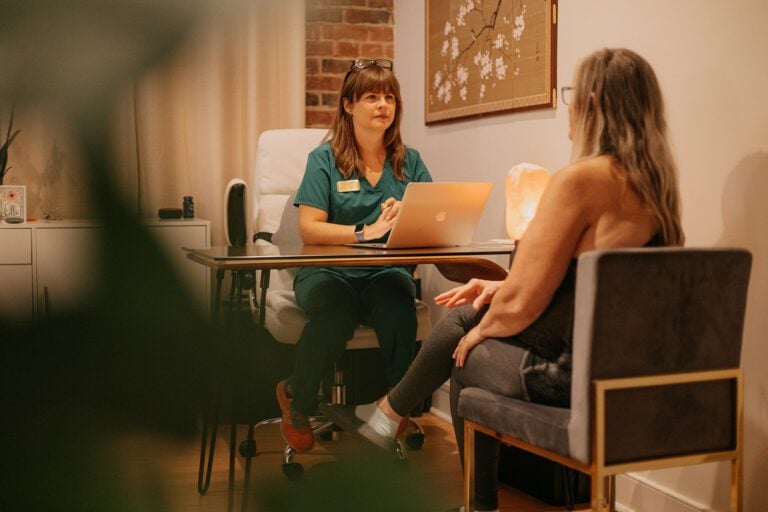
Your first step is a complimentary consultation, a free visit where we sit down together and I learn about what you’re going through. I want to understand your digestive history, your diet, your stress levels, and the full picture. There’s no pressure and no commitment.
If we move forward, I’ll study your intake form before your first treatment visit and come prepared with targeted questions to clarify your diagnosis. At that first treatment, you’ll receive your initial acupuncture session and, if appropriate, your first herbal prescription. I’ll also give you a Symptom Tracker, a tool where you track changes in bloating frequency, intensity, and related symptoms like bowel habits and stress levels that tell us whether treatment is moving in the right direction.
Most bloating patients benefit from a combination of acupuncture and Chinese herbal medicine. The acupuncture works on regulating the nervous system, resolving stagnation, reducing inflammation, and restoring proper digestive motility. The herbs work from the inside to address the specific pattern driving your bloating, whether that’s Liver Qi Stagnation, Spleen deficiency, Damp-Heat, or any of the other patterns described above.
Ready to Get to the Root of Your Bloating?
Bloating doesn’t have to be your normal. If you’re in Richmond, Virginia, whether you’re in the Fan District, Church Hill, Short Pump, Midlothian, or Glen Allen, I’d love to talk with you about what’s going on and whether acupuncture might help.
Your first consultation is free. Book online here or call us at (804) 234-3843.
Maegan Hodge, L.Ac., MSOM. Board Certified, NCCAOM/NCBAHM #137186. Master of Science in Oriental Medicine: National University of Natural Medicine. Bachelor of Arts in Psychology: University of Virginia. Treating patients in Richmond, VA since 2010. Centered: Richmond Acupuncture & Wellness. Last reviewed: May 2026.
Related Articles You May Find Helpful:
- Acupuncture for IBS: How Chinese Medicine Can Help
- Acupuncture for Constipation: Root Causes and How We Treat Each One
- Acupuncture for Depression: Why Chinese Medicine Looks at the Whole Picture
- Acupuncture for Stress: How Chinese Medicine Can Help
References:
Acupuncture for functional dyspepsia: Bayesian meta-analysis (2024)
Acupuncture influences multiple diseases by regulating gut microbiota (2024)