
Fertility Acupuncture in Richmond, VA: A Chinese Medicine Approach to Getting Pregnant
If You’re Struggling to Get Pregnant, You’re Not Alone
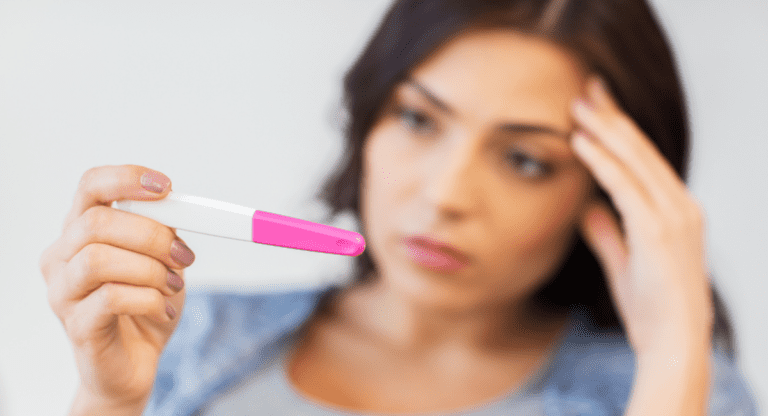
If you’ve been trying to conceive and it’s not happening the way you expected, I want you to know something: your body is not broken. Fertility challenges are more common than most people realize, and the isolation you might be feeling right now — the baby shower invitations that sting, the well-meaning questions from family — that’s real, and it’s valid.
As a licensed acupuncturist in Richmond, Virginia who specializes in integrative fertility treatments, I’ve worked with women at every stage of the fertility journey — from those just starting to try, to those deep into IVF cycles feeling emotionally and physically drained. And I want to share something important: Chinese medicine sees fertility differently than Western medicine, and that different perspective often opens doors that felt closed.
In this article, I’ll walk you through what fertility acupuncture actually does, the five most common Chinese medicine patterns I see in my fertility patients, what the research says, and what it looks like to work with me here in Richmond.
What Conventional Medicine Doesn’t Always Tell You About Fertility
When you visit a Reproductive Endocrinologist (RE), they’ll typically run bloodwork — checking your FSH, AMH, estradiol, thyroid levels — and possibly do imaging to look at your uterus and fallopian tubes. This is important information, and I always encourage my patients to get it.
But here’s what I see over and over in my practice: the labs come back “normal,” and yet pregnancy isn’t happening. Or the labs show one issue — say, slightly elevated FSH or a thin lining — but no one is looking at the bigger picture of why your body is producing those numbers in the first place.
That’s where Chinese medicine fills the gap. Rather than treating a single lab value, we look at the entire landscape of your health: your menstrual cycle quality, your basal body temperature patterns, your digestion, your sleep, your stress levels, and your emotional state. All of these give us diagnostic information that helps us understand why your body isn’t conceiving — and what to do about it.
How Chinese Medicine Understands Fertility
In Chinese medicine, fertility isn’t just about your ovaries and uterus. It’s about the overall environment of your body — whether there’s enough blood flow to your reproductive organs, whether your body is thermally warm enough to sustain a pregnancy, whether stress hormones are disrupting your cycle, and whether your digestive system is producing enough energy to support conception.
I see five primary patterns in my fertility patients. Most women present with a combination of two or three of these, which is exactly why a one-size-fits-all approach doesn’t work. Your pattern is unique, and your treatment plan should be too.
Kidney Yang Deficiency — “Your Body Runs Cold”
This is one of the most common patterns I see in my Richmond fertility patients, and it’s often the most overlooked. In Chinese medicine, Kidney Yang is the warming, activating energy that drives your reproductive system. When it’s deficient, your body simply isn’t warm enough to create the ideal conditions for conception.
If this sounds like you, you might notice that your basal body temperature (BBT) struggles to rise after ovulation, or your overall temps run low throughout your cycle. You may feel cold easily — especially your feet and low back — have low energy, and notice that your luteal phase is shorter than it should be. A thin endometrial lining is also common with this pattern.
One thing you can try: Start paying attention to thermal habits. Reduce iced drinks and raw cold foods, especially in the second half of your cycle. Warming foods like bone broth, ginger tea, and cooked root vegetables can support your body’s warmth from the inside.
Blood Stasis — “Stuck Circulation”
Blood Stasis means that blood isn’t flowing freely to and from your reproductive organs. Think of it like a river that’s developed logjams — the water is there, but it can’t get where it needs to go. This pattern is especially common in women with endometriosis, painful periods with dark clotted blood, or a history of fibroids.
When blood circulation to the uterus is impaired, it directly affects endometrial lining quality, egg nourishment, and implantation potential. I often see this pattern alongside hormonal imbalances that are driven by poor pelvic circulation.
One thing you can try: Gentle movement makes a real difference here. Walking, yoga, or even simple hip circles help promote pelvic blood flow. Avoid sitting for long stretches without getting up to move.
Liver Qi Stagnation — “The Stress Pattern”
If there’s one pattern that affects almost every fertility patient I see, it’s this one. Liver Qi Stagnation is the Chinese medicine way of describing what happens when chronic stress, frustration, or emotional tension disrupts the smooth flow of energy through your body — and especially through your reproductive system.
The Liver in Chinese medicine governs the smooth flow of Qi and blood and has a direct relationship with your menstrual cycle. When Liver Qi stagnates, you might notice irregular cycles, PMS that feels intense (breast tenderness, irritability, mood swings), headaches around your period, or a feeling of tightness in your chest and shoulders.
Here’s what makes this pattern particularly relevant for fertility: stress hormones like cortisol directly compete with reproductive hormones. When your body is stuck in fight-or-flight mode, it deprioritizes reproduction. This isn’t a character flaw — it’s basic physiology.
One thing you can try: Find one stress-regulation practice you can commit to daily — even five minutes. Deep breathing, a short walk outside, journaling, or simply stepping away from screens before bed can help move stagnant Liver Qi.
Spleen Qi Deficiency — “Not Enough Fuel”
Your Spleen in Chinese medicine is responsible for transforming the food you eat into usable energy and blood. When Spleen Qi is deficient, your body simply isn’t producing enough of the raw materials needed to build a healthy endometrial lining, produce quality eggs, and sustain early pregnancy.
Women with this pattern often feel fatigued, experience bloating or digestive issues, bruise easily, and may have spotting before their period arrives. Their periods may be lighter than expected, and they often feel mentally foggy or overwhelmed.
What I see clinically is that this pattern frequently shows up in women who are high achievers — they’re running on caffeine and willpower, not eating regular meals, and their bodies are running on empty even though they look fine from the outside.
One thing you can try: Eat warm, cooked meals at regular intervals. Your Spleen works hardest when it has to process cold, raw, or complicated foods. Think simple: soups, stews, roasted vegetables, rice, and protein at every meal.
Damp-Heat — “Inflammation and Congestion”
Damp-Heat is Chinese medicine’s way of describing what Western medicine might call chronic low-grade inflammation combined with fluid accumulation. This pattern is especially relevant for women with PCOS, recurrent yeast or bacterial infections, or thick, cloudy cervical mucus that doesn’t have the stretchy, egg-white quality needed for conception.
In my practice, I often see Damp-Heat alongside Blood Stasis and Spleen Qi Deficiency — the inflammation creates an environment that further impedes healthy circulation. Women with this pattern may notice acne (especially along the jawline), a heavy sensation in their body, loose stools or alternating digestive issues, and cycles that feel “sluggish.”
One thing you can try: Reduce foods that generate dampness — dairy, sugar, fried foods, alcohol, and highly processed carbohydrates. Incorporate anti-inflammatory foods like turmeric, leafy greens, and green tea.
What the Research Says About Fertility Acupuncture
A growing body of published research supports what I see in my treatment room every week. While I’m always careful to note that research in this field is still evolving, the evidence is encouraging:
Improved pregnancy and live birth rates during IVF: A 2024 systematic review and meta-analysis in Archives of Gynecology and Obstetrics analyzed 25 trials involving 4,757 participants. The clinical pregnancy rate in acupuncture groups was 43.6% compared to 33.2% in control groups, and live birth rates were also significantly higher at 38.0% versus 28.7%. (Zhang et al., 2024 — PubMed)
Enhanced endometrial receptivity: A systematic review and meta-analysis in BMC Complementary Medicine and Therapies found that acupuncture improved pregnancy rates, increased endometrial thickness, and promoted the trilinear endometrial pattern associated with successful implantation. (Zhong et al., 2019 — PMC)
Reduced anxiety and depression during fertility treatment: A 2023 systematic review in Healthcare analyzed 12 randomized controlled trials involving 1,930 women and found that acupuncture significantly improved anxiety and depression scores in women with infertility — and also improved clinical pregnancy rates as a secondary outcome. (Li et al., 2023 — PMC)
Growing understanding of mechanisms: A 2024 scoping review in Frontiers in Endocrinology summarized the existing clinical evidence and found that acupuncture can affect gonadotropin-releasing hormone secretion, improve uterine blood flow, and support both natural conception and assisted reproduction outcomes. (Robinson et al., 2024 — PMC)
A Real Patient’s Journey
I want to share a story that’s representative of many patients I’ve worked with (details changed for privacy).
A woman came to me at 36 after a year of trying to conceive with no success. Her doctors had found no clear explanation — her labs were in the “normal” range, but pregnancy just wasn’t happening. She was frustrated, anxious, and starting to lose hope.
When I looked at her from a Chinese medicine perspective, the picture was much clearer. Her BBT chart showed low overall temperatures with a weak post-ovulation rise (Kidney Yang Deficiency). She had painful periods with dark, clotted blood (Blood Stasis). And her stress levels were through the roof — she was barely sleeping and clenching her jaw every night (Liver Qi Stagnation).
We built a treatment plan combining weekly acupuncture sessions timed to her cycle phases with a custom Chinese herbal formula targeting all three patterns. We tracked her BBT chart closely, adjusted her herbs as her cycle responded, and incorporated dietary and lifestyle changes.
By month three, her BBT pattern had shifted — stronger post-ovulation rise, more consistent temps overall. Her periods became less painful with noticeably less clotting. She was sleeping better and told me she finally felt like her body was “working with her instead of against her.”
She conceived naturally in her fifth month of treatment.
Not every story unfolds this way, and I’m always honest with my patients about that. But what this case illustrates is something I see consistently: when we identify the right pattern and treat the root cause, the body often responds.
What Working With Me Looks Like
Your First Visit
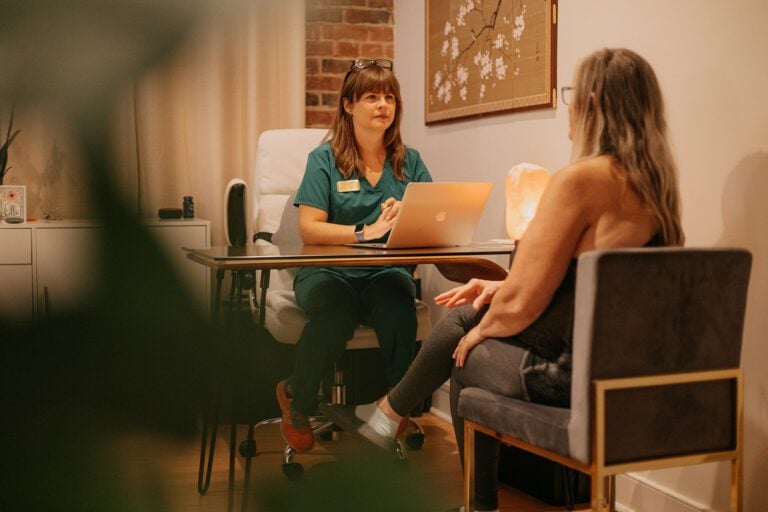
Your first appointment is a deep dive. I’ll ask about your full menstrual cycle history, your fertility journey so far, any labs or imaging you’ve had, your digestion, sleep, stress levels, and emotional health. I’ll also look at your tongue and check your pulse — two of the most important diagnostic tools in Chinese medicine.
From there, I’ll identify your Chinese medicine pattern and create a treatment plan tailored specifically to you. This typically includes acupuncture, and often Chinese herbal medicine as well.
Treatment Frequency and Timeline
For fertility patients, I generally recommend weekly acupuncture sessions, sometimes twice weekly during key phases of your cycle (like the follicular phase or around ovulation). Most women begin noticing cycle changes within two to three months, and I recommend a minimum commitment of three to six months for the best outcomes.
BBT Tracking
Basal body temperature charting is one of my most important tools for fertility patients. Are typically only employed when a patient is able to do herbs, but regardless, it’s a great tool. Your BBT chart tells me more about what’s happening hormonally than almost any other single measure. I’ll teach you how to track, and we’ll review your charts together at each visit to monitor progress and adjust treatment.
How Acupuncture Actually Feels
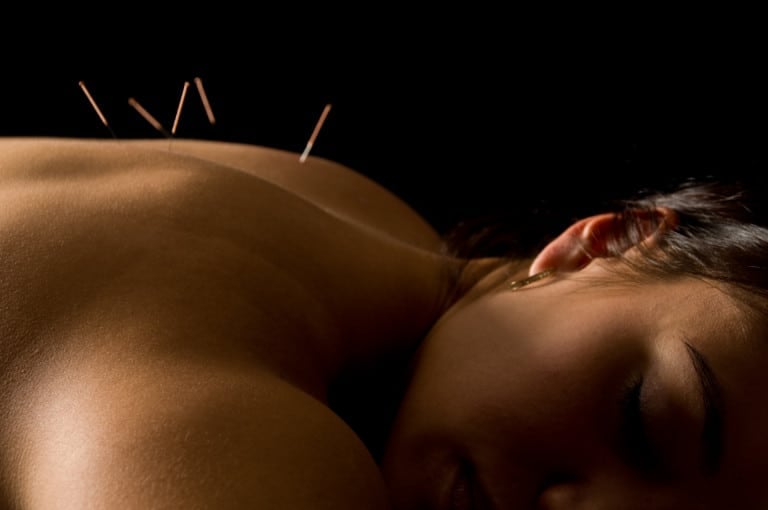
If you’ve never had acupuncture, I know the idea of needles can feel intimidating. The needles I use are hair-thin — nothing like the needles used for blood draws or injections. Most of my patients tell me they feel a mild sensation when the needle goes in, followed by deep relaxation. Many fall asleep during treatment. It’s one of the few times in your fertility journey where you get to just lie down, breathe, and let someone else take care of you.
Acupuncture Works Alongside IVF and IUI
If you’re working with a Reproductive Endocrinologist, fertility acupuncture isn’t an either/or choice — it’s something you can do alongside your medical treatment. Many of my patients are actively going through IVF or IUI cycles while receiving acupuncture, and their REs are often supportive of the combination.
Acupuncture during IVF can be timed strategically: during the stimulation phase to support follicle development and blood flow, around embryo transfer to promote relaxation and uterine receptivity, and during the two-week wait to manage anxiety. I coordinate timing with your RE’s protocol to make sure everything works together seamlessly.
Whether you’re pursuing assisted reproduction or trying to conceive naturally, acupuncture supports the same fundamental goal: creating the healthiest possible environment for conception and pregnancy.
Ready to Explore Fertility Acupuncture in Richmond?
If you’re in the Richmond, Virginia area and you’re looking for a different approach to your fertility journey — one that looks at the whole picture, not just your lab numbers — I’d love to talk with you.
I offer a free new patient consultation where we can discuss your situation, your goals, and whether fertility acupuncture is a good fit for you. There’s no pressure and no commitment — just a real conversation about what’s possible.
Centered Richmond Acupuncture & Wellness
20 N. 20th St., Suite A, Richmond, VA 23223
Phone: (804) 234-3843
We’re conveniently located for patients from the Fan District, Church Hill, Short Pump, Midlothian, Glen Allen, and throughout the greater Richmond area.
Schedule Your Free Consultation | Book an Appointment
Maegan Hodge, L.Ac., MSOM. Board Certified, NCCAOM/NCBAHM #137186. Master of Science in Oriental Medicine: National University of Natural Medicine. Bachelor of Arts in Psychology: University of Virginia. Treating patients in Richmond, VA since 2010. Centered: Richmond Acupuncture & Wellness. Last reviewed: May 2026.
Related Articles You May Find Helpful:
- Acupuncture for Low AMH: Can Chinese Medicine Help You Get Pregnant?
- Acupuncture and Bloating: What Your Gut Is Trying to Tell You
- Acupuncture for Anxiety: A Chinese Medicine Guide
- Acupuncture for Stress
References: